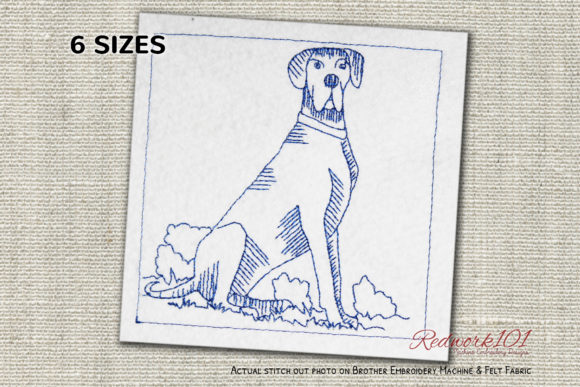
Reviewing the Great Dane Dog Redwork Embroidery Design
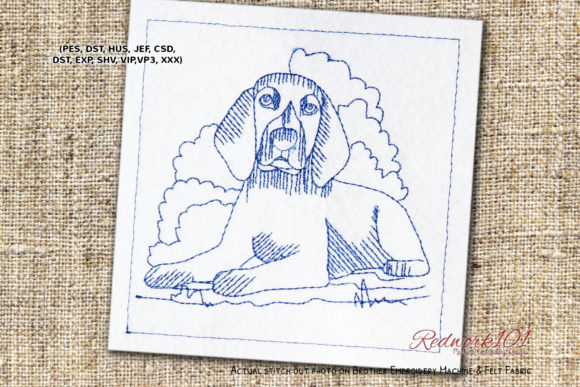
Let’s talk about the Great Dane Dog Redwork embroidery design from a maker's perspective. This isn't a theoretical rundown; it's a practical judgment based on the kind of thinking I do before loading a file for a client order or a new product for my shop. The first impression here is clear: it’s a dignified, elegant silhouette. Redwork, with its simple line-art approach, gives this Great Dane a classic, almost timeless personality. It’s not a playful cartoon; it’s a stately portrait. That mood immediately tells me this design belongs to projects where a sense of grace and quiet affection is key.
Where This Design Finds Its Natural Home
I picture this design embroidered on a natural linen tote bag for a dog lover, or as a subtle feature on the corner of a cotton pillow cover in a nursery. Its clean lines would translate beautifully onto a baby blanket or a set of kitchen towels as a personalized gift. For a small business owner crafting boutique apparel, a single, well-placed Great Dane on the chest of a heather gray sweatshirt could become a signature item. The simplicity of redwork means it avoids feeling overly decorative or kitschy, which boosts its versatility. It could easily be the focal point of an embroidered patch for a hat, or a minimalist accent on an apron.
The Real-World Stitching Considerations
In practical embroidery situations, the success of a design like this hinges on clarity. Since the description notes the outer box stitch is optional and can be skipped, the core design is that single-line Great Dane silhouette. This is a major advantage. On curved surfaces like caps, or on textured fabrics like some sweaters, a complex border can distort or feel bulky. Here, you have the freedom to use just the dog, making it adaptable. For machine embroidery, the stitch density should be manageable—it’s primarily running stitch outlines, not large fill stitch areas. That means it’s less demanding on your machine and stabilizer setup, and it’s likely to perform well on thinner fabrics like baby apparel or light tees where dense satin stitch fills can be problematic.
Scenarios That Demand Extra Care
While its simplicity is a strength, there are places I’d proceed with caution. On very dark fabric backgrounds, the traditional red thread of redwork might lose contrast unless you thoughtfully switch to a lighter, high-contrast color. If you're embroidering on stretchy fabric for activewear, even a simple design needs excellent stabilizer to prevent distortion of those clean lines. Also, if you plan to use it at a very small hoop size for a tiny charm or on a child's small item, inspect the digitized file carefully. The fine details of the ear shape or the tail need to remain distinct at a reduced scale to avoid blobbing. Always test on scrap fabric first.
How This Design Impacts Your Product and Business
From a commercial and creative entrepreneur’s view, this design adds value through its recognizability and clean handmade presentation. A well-embroidered Great Dane on a product feels intentional and professional. It speaks directly to a niche audience—Great Dane owners, dog lovers—which builds customer trust and engagement. For an Etsy seller offering personalized pet gifts, this becomes a powerful digital asset. Its classic style ensures it doesn’t look dated, aiding brand consistency across seasons. For giftability, it’s a winner; it feels personal without being overly sentimental, suitable for a wedding gift for a couple with a Dane or a holiday present.
Essential Designer Notes Before You Stitch
My routine before using any embroidery file includes a few critical steps. For the Great Dane Dog Redwork, I would:
- Run a test stitch on a scrap of the actual project fabric, checking thread color contrast against the background.
- Review the stitch density in my software to ensure it’s appropriate for my target fabric—lightweight or heavyweight.
- Confirm the effective hoop size needed; a simple design might allow for smaller hoops, expanding project options.
- Inspect the small details, like the connection points of the legs, to ensure stitching integrity.
- Create black and white mockups, and visualize it on both light and dark backgrounds, to plan color choices.
- Always use the proper stabilizer; even for redwork, good stabilization preserves that elegant line quality.
- Crucially, verify the licensing terms of the design. Can it be used for commercial embroidery projects, or is it for personal use only? This is fundamental before selling finished items like tote bags or apparel.
Ultimately, the Great Dane Dog Redwork embroidery design is a tool. Its value is realized not in the file itself, but in how you apply it. It’s a design that encourages thoughtful placement and fabrication. It won’t shout for attention on your product, but it will confer a quiet, confident quality that discerning customers and recipients will appreciate. It’s a solid choice for makers who understand that sometimes, the most powerful statement in custom apparel and handmade products is made with a simple, well-executed line.