Healing Angels Embroidery Design Review for Business Merch
When a client brings a design like Healing Angels to me for business merchandise, my first job is to look beyond its aesthetic and evaluate its performance as a brand asset. This review is from the perspective of an embroidery designer assessing its potential for branded patches, uniforms, and small business products.
First Impression: A Balancing Act of Softness and Structure
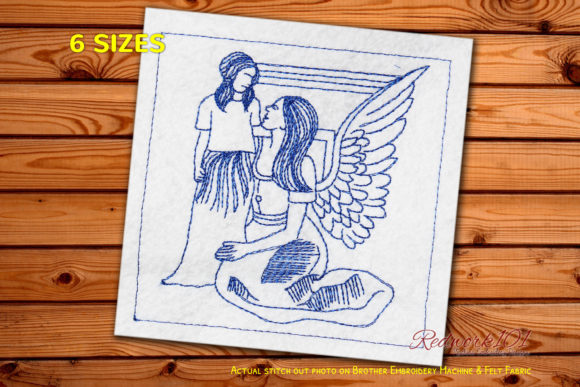
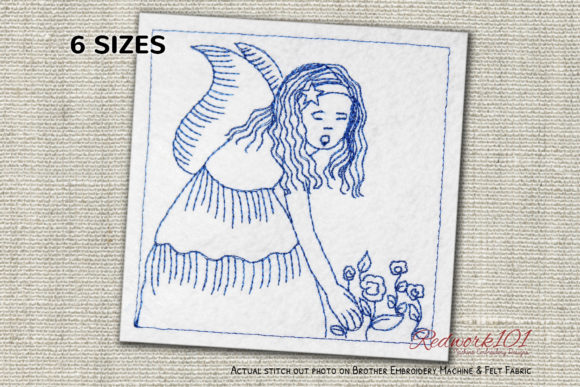
The title, Healing Angels, immediately suggests a gentle, compassionate, and hopeful visual personality. For businesses in categories like wellness boutiques, holistic cafés, gift shops, or even family-oriented florists, this emotional resonance is a powerful starting point. The described element—the optional outer box stitch—introduces a key consideration. That box can frame the design, giving it a more structured, classic, or even badge-like feel, which leans toward a professional and premium presentation. Skipping the box, as the description notes is possible, would leave a softer, more decorative and handmade impression. This flexibility is a significant advantage for business owners who want to tailor the design’s vibe to their specific brand identity.
Performance in Real-World Business Applications
Let’s translate this into the physical world of threads and fabric. For a small business looking to create merchandise, Healing Angels presents several compelling use cases.
Embroidered Patches for Versatile Branding
This design is a strong candidate for a custom embroidered patch. Patches are incredibly versatile for small businesses: they can be sold as standalone products, used as product labels on handmade items, or applied to staff aprons and totes. The optional box stitch could be crucial here, creating a clean border that makes the patch feel finished and official. A boutique could sew these onto tote bags as a signature mark, a café could use them on aprons, or a creative studio could offer them as customer gifts. However, patch success hinges on one critical test: does it work at a small size? Before any production, you must run the embroidery file at the intended patch dimensions to ensure details remain clear and stitch density doesn’t become problematic.
Uniform and Apparel Accents
For staff uniforms, like polo shirts or work shirts, Healing Angels could serve as a subtle chest logo or sleeve detail, conveying the brand’s caring ethos. On a cap, the design needs careful evaluation for the curved surface of the front panel. High stitch density in areas of the design could lead to stiffness on a flexible cap fabric. For apron embroidery or on the front of a tote bag, where the canvas is flatter and larger, it’s likely a safer, more effective application. Always test on real fabric samples—a chef’s apron fabric has a different texture than a canvas tote, affecting how the design settles.
Enhancing Product Value and Recognition
Used consistently across different items—patches on products, logos on uniforms, accents on packaging—Healing Angels builds visual consistency. This repetition strengthens brand recognition. A customer seeing the same emblem on a shop’s tote bag, its staff’s cap, and its product tag begins to associate that symbol with the business’s quality and values. For a handmade brand or Etsy seller, this embroidery added to their goods increases the perceived product value, signaling care and craftsmanship beyond a simple printed label.
Caution Areas and Practical Designer Notes
Not every application will be ideal. My professional advice involves spotting potential pitfalls before they cost you time and materials.
- Size and Density: Be wary of using it at very small patch sizes or on items with tiny areas like cap fronts if the design has intricate details or lettering. High stitch density can make small patches stiff and uncomfortable.
- Fabric and Color Contrast: The design’s performance on dark uniforms or textured fabrics depends heavily on thread color choice and stabilizer use. Always review thread color contrast against your background fabric. A test stitch-out on the actual material is non-negotiable.
- The Box Stitch Decision: Remember, the color of the outer box is often different. Consider if that box color complements your brand’s palette. Skipping it entirely simplifies the design and may reduce stitch count, which can be beneficial for durability on items needing frequent washing, like work shirts.
Here is a practical checklist I follow for a business client:
- Test in Black and White First: Create a simple monochrome stitch-out. This reveals the core structure and detail clarity without color distractions.
- Check Hoop Size Compatibility: Ensure the embroidery file fits your machine’s hoop for the intended product size. A design meant for a large tote might need resizing for a cap.
- Create a Printable Mockup: Before stitching physical samples, use a digital mockup to show the client how Healing Angels will look on their apron, bag, or shirt. This aligns expectations.
- Compare Beside Other Assets: Place the embroidered sample beside your other branding elements (logos, fonts) to ensure visual harmony.
- Confirm Commercial Licensing: Before using this digital embroidery file for any business merchandise, verify your license permits commercial embroidery on products for sale.
Final Thoughts on Brand Identity and Engagement
For a small business, adopting a design like Healing Angels is more than a decorative choice. It’s a brand identity decision. The design’s inherent themes can foster customer trust and buyer engagement by visually communicating compassion and care. Its handmade presentation through embroidery reinforces authenticity. However, its professionalism is controlled by your execution: using proper stabilizer, selecting appropriate thread colors, and applying it to suitable products. A well-executed Healing Angels patch on a high-quality tote bag feels premium and intentional. A poorly sized, dense version on a thin cap might feel clumsy and cheap.
In the end, Healing Angels offers a meaningful symbol with useful flexibility for merchandise creation. Its success in your commercial embroidery projects will depend entirely on your pre-production diligence: testing, mocking up, and aligning it with your brand’s practical needs and visual goals.